


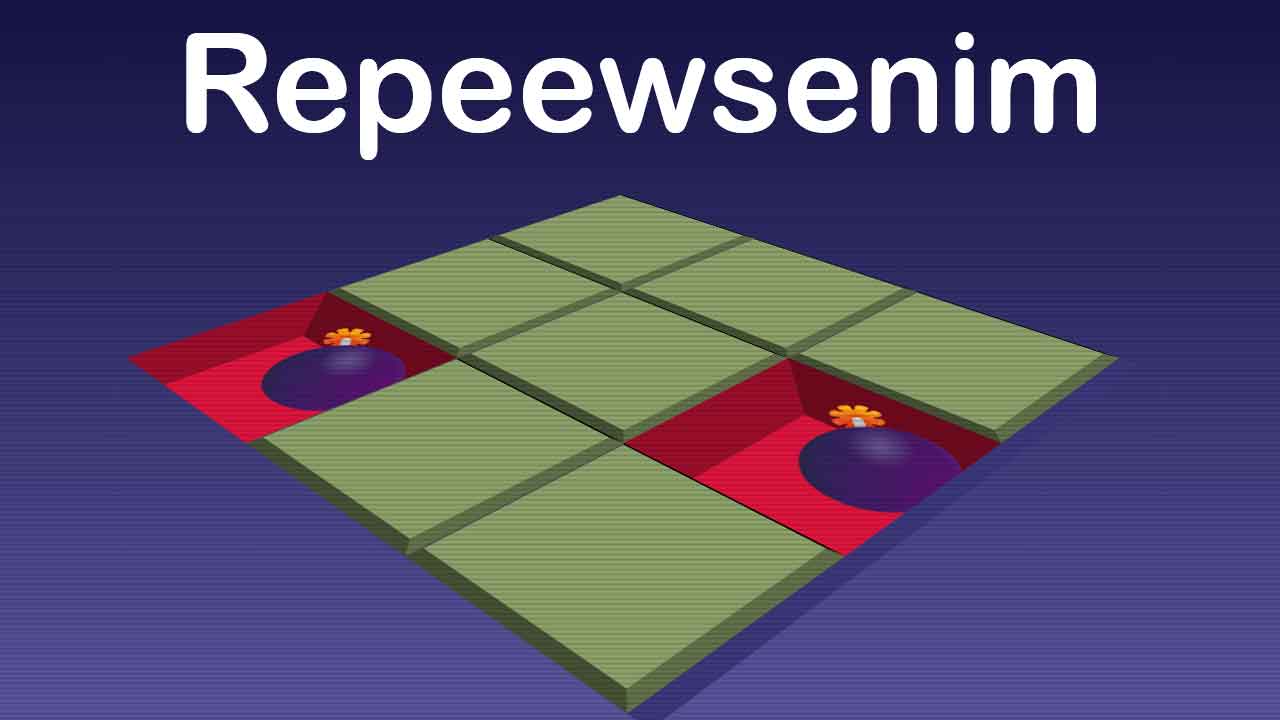


About Minesweeper
Introduction to Minesweeper Minesweeper is a timeless puzzle game that has challenged generations with its blend of logic, deduction, and risk-taking. First popularized as a built-in computer game, this classic grid-based brain teaser continues to thrive in modern online formats. Whether you're a puzzle enthusiast or a beginner looking to sharpen your mind, Minesweeper remains a go-to game that rewards careful thought over speed. Gameplay Overview In Minesweeper , your objective is to uncover every safe tile in a grid without detonating any hidden mines. Each click reveals either an empty space, a number indicating how many adjacent mines are nearby, or a mine that ends the game. The challenge lies in using clues provided by revealed numbers to deduce the positions of mines and avoid them. The game comes in multiple difficulty levels: Beginner – 9x9 grid with 10 mines Intermediate – 16x16 grid with 40 mines Expert – 30x16 grid with 99 mines For those who crave a more intense challenge, many modern versions of Minesweeper also allow custom grid sizes and mine counts. How to Play Minesweeper Left-click to uncover a square. Right-click to place a flag where you suspect a mine. Numbers indicate how many mines are in the surrounding 8 squares. Chain reactions occur when an empty square is revealed—this automatically uncovers adjacent safe squares. By combining simple mechanics with deep logic-based gameplay, Minesweeper creates a highly addictive puzzle experience that improves spatial reasoning and deduction skills. Why Minesweeper Still Matters Today Despite its minimalist design, Minesweeper remains a beloved title thanks to its perfect balance of simplicity and brain-stretching complexity . The grid-based setup is a brilliant test of logical reasoning, making it a favorite among fans of strategy and pattern recognition games. It’s an excellent way to unwind while keeping your brain active. Today, Minesweeper is available in mobile apps, web browsers, and desktop platforms. Enhanced visuals, sound effects, themes, and even timer-based challenges give the game new life without losing the original appeal. Some versions also include leaderboards, daily challenges, and hint systems for newcomers. Minesweeper Controls Guide Left Click (Tap): Reveal a square Right Click (Long Press on mobile): Flag or unflag a suspected mine Double Click (optional in some versions): Reveal adjacent squares if flags match nearby mine count Tips for Winning at Minesweeper Always start by clicking a corner or middle square for maximum reveal. Use the process of elimination to deduce mine locations. If a square shows “1” and only one adjacent square is unrevealed, that square is almost certainly a mine flag. Use flagged mines to help deduce the position of other safe spaces. Similar Games to Explore If you enjoy Minesweeper, try other logic-based puzzle titles like: Sudoku – A number-placement puzzle that requires strategic logic. 2048 – Merge numbers strategically to reach the 2048 tile. Tic-Tac-Toe – A fast-paced classic board game of strategy for two players. Minesweeper may look simple, but beneath its clean design lies a challenging puzzle that pushes your logic and deduction skills to the limit. Whether you're playing to relax or beat your best time, Minesweeper is a timeless classic that continues to captivate puzzle lovers everywhere. Play now and put your brain to the test on every grid!
Practical approach
Use each revealed number as a clue about the neighboring squares. When a count matches the number of covered spaces around it, you can identify the safe or dangerous positions with more confidence. Avoid random clicks when the board is uncertain; work from the clearest information outward, and reconsider earlier assumptions if a later clue does not fit.
Explore more
Minesweeper is part of Puzzle Games. For related browser play, try Contexto or Block Wood Puzzle.
Helpful questions
What do the numbers mean?
Each revealed number indicates how many hidden mines are in the surrounding squares. Compare overlapping number clues to identify safe moves.
Should you guess?
Work from confirmed information whenever possible. When a board looks uncertain, check nearby clues again before selecting another square.
When two nearby clues share covered squares, compare them directly. The difference between their counts can reveal a safe square or a mine without relying on a guess. This is especially useful once individual clues no longer answer the question alone.
Practical guide for Minesweeper
The existing description is the factual baseline for Minesweeper. This guide does not add claims about undocumented modes, controls, rewards, characters, platforms, or progression. Instead, use the confirmed objective and visible game state to guide every decision. The game is part of Puzzle Games, and its existing tags include puzzle, logic, strategy, classic, mine.
Observe before acting
Begin each attempt by identifying the clearest available information. It may be a route, a clue, a target, a timing point, a position, or an available choice. A deliberate first action gives better feedback than a rushed one. After acting, check what changed and reset attention to the new state rather than following a plan that no longer fits.
Protect the next decision
A useful action does more than solve the immediate problem. It also leaves time, room, position, or information for the next choice. When two options look possible, prefer the one that keeps a correction available. This is a practical way to make repeat attempts more consistent without assuming extra features beyond the stored game record.
Use repeat sessions as practice
After a setback, identify the first point where the approach became unclear. On the next session, change one thing at that point: read earlier, wait for a better cue, choose a safer line, or keep more options open. A small, specific adjustment is easier to evaluate than trying to change every action at once.
Avoid rushed recovery
One common error is responding to uncertainty with several more uncertain inputs. Pause long enough to reassess the current objective. A controlled response can preserve the run or reveal a clearer route; uncontrolled correction often makes the next decision harder. Progress comes from observation, timing, and choosing actions with a reason.
Minesweeper FAQ
What should a beginner focus on?
Focus on the immediate objective and the result of each action. Use early attempts to learn which choices provide the clearest feedback.
Are all controls confirmed here?
Only controls stated in the stored game guide should be treated as confirmed. Check the game screen for the available inputs.
How can a repeat attempt improve?
Test one concrete change: earlier observation, steadier timing, a safer route, or a simpler first decision.
Is speed always helpful?
No. A well-timed, understood action is generally more useful than rushed corrections.
What is a common mistake?
Solving only the nearest problem without considering what the action leaves for the next moment.
Who may enjoy this game?
Players who enjoy puzzle games and the documented themes of puzzle, logic, strategy, classic, mine may enjoy this style.
How should a difficult moment be handled?
Break it into a smaller choice, use the clearest cue available, and reassess after the result.
Why return for another session?
A repeat attempt can refine one part of the approach and make the confirmed gameplay loop easier to read.
Decision review
Use the original description to identify the confirmed objective. Then ask what the current state reveals about the next action. A useful choice has a reason: it creates room, protects a route, checks information, improves position, or matches a visible cue. After the result, stop and look again rather than continuing by habit.
Reviewing a difficult moment is more useful than repeating it unchanged. Find the first choice that made the situation restrictive. On the next attempt, make one earlier adjustment. This can mean choosing a clearer route, waiting for a better timing cue, or preserving an alternative response. The aim is to learn from the displayed gameplay rather than to infer features that are not documented.
Short-session checklist
- Read the immediate objective before acting.
- Choose an input with a clear purpose.
- Keep a margin for the next choice whenever possible.
- Reassess after each important change.
- Carry one lesson into the next attempt.
This checklist applies to Minesweeper because it is based on the current game state and the existing game record. It does not depend on undocumented modes, rewards, or mechanics.
Additional FAQ
How should I use a repeat attempt?
Test one specific improvement instead of changing every decision at once.
What is the safest way to learn?
Use the clearest available information and prefer a choice that leaves a correction possible.
Where can I find related play?
Use the existing category link and Related Games area on the page, then check each game’s own description.
Keeping the guide factual
This page deliberately separates useful playing advice from unsupported detail. The stored overview establishes what Minesweeper is and how its documented gameplay works. The expanded material explains how to observe, choose, review, and improve within that boundary. It does not claim additional characters, levels, devices, features, multiplayer options, rewards, or a control scheme beyond the game’s existing information.
Clarity is practical: identify a safe line, check a clue, wait for a cue, or leave room for a follow-up decision. The exact expression changes with the documented game, but the underlying habit is the same: make a move because the current state supports it, then use the new state to choose what follows.
Loading comments...